It’s Always ‘That Kid’| Let’s Talk About Behavior | POLLY BATH
Date: July 17th, 2026
Date: July 17th, 2026
Date: November 30th, 2021
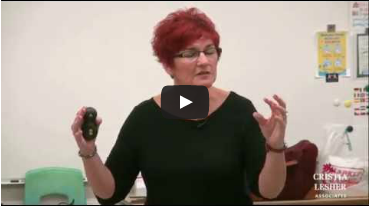
Many of the difficult behaviors that get in the way of teaching and learning occur because kids don’t have the social and emotional skills that are being asked of them. The solution is straightforward: identify the social and emotional skills you need your students to have and teach them those skills. Don’t get hung up […]
Date: February 5th, 2009
Undergirding the paper-and-pencil manipulations of linear-sequential abstract math symbols is the world of 2-dimensional pictorial representations and 3-dimensional spatial representations with manipulatives. This is an interactive world, and it is at our fingertips for exploring mathematics. The beauty of it is that it allows us to literally SEE and DO the math. This makes math […]
Date: January 30th, 2009
Using charts or tree diagrams to represent probabilities, participants will solve problems of simple and conditional probability, including the probability of winning the lottery and the Monty Hall Problem. Participants will use grams of fat in McDonald’s meals to analyze data with a stem and leaf plot and a box and whiskers plot. A scatter […]
Date: January 30th, 2009
When students do not get place value, especially to the right of the decimal point, how can they make any sense of scientific notation? Participants will use base ten blocks to model numbers on both sides of the decimal point and write those numbers in standard form, in various expanded forms, and in scientific notation. […]
Date: January 30th, 2009
With interlocking cubes, participants will build three-dimensional constructions following a growing pattern and record the number of blocks needed for each iteration. Participants will create a difference table to find the degree of the function that describes the growing pattern. Matching this table with a difference table for the standard form for that degree equation […]
Date: January 30th, 2009
Representing mathematics concepts with concrete manipulatives provides visual, spatial, tactile, and kinesthetic input to the learner and allows for greater participation in the learning process by the right half of the brain. Using 2-color chips, dice, and algebra tiles, participants will model operations with integers and will add, subtract, and evaluate polynomials, solve equations, multiply […]
Date: January 30th, 2009
Date: January 28th, 2009
Participants will explore the variety of methods that real people use to do computation in real life that differ from the one “right” way learned in school. Base 10 blocks will be used to represent whole numbers and decimals, and pattern blocks will be used to represent fractions. This workshop is applicable to all persons, […]
Date: January 28th, 2009
Participants will be introduced to a variety of classroom activities that use interlocking cubes and dice to give concrete experiences to primary students in the areas of counting, number sense, spatial sense, logic and reasoning, problem solving, probability, and statistics. Upon completion of the workshop, participants will be able to teach the concepts covered through […]
 Join our Facebook conversation on changing the WORST classroom behavior
  603-632-5834